Products and services
Examid® PA66 GF50 — high-modulus 50% glass-filled heat-stabilized polyamide 66, metal replacement
Description
Examid® PA66 GF50 — high-modulus 50 % glass-filled heat-stabilized polyamide 66 from Material Wizard. An injection-molding compound with the highest reinforcement level in the MW PA66 family: 50 % short-cut glass fiber plus a heat-stabilizer package for long-term service at 130–160 °C. Designed for structural metal-replacement applications (replacing aluminum, zinc die castings and steel) that demand the maximum specific stiffness, dimensional stability and heat resistance of PA66 while retaining the traditional advantages of a polymer: corrosion resistance, ease of processing and part weight reduction.
Examid® PA66 series — where GF50 fits
- Examid® PA66 (unfilled) — base unfilled grade
- Examid® PA66 GF15/GF25 — low/medium reinforcement
- Examid® PA66 GF30 — the standard for engineering parts
- Examid® PA66 GF50 — high-modulus metal replacement (this page)
- Examid® PA66 CF30/CF40 — carbon-fiber grades
Why GF50 for metal replacement
- Specific stiffness: a modulus of 16-18 GPa at a density of 1.55 g/cm³ → specific modulus ~10.5 GPa·cm³/g. Aluminum 6061-T6: modulus 69 GPa at a density of 2.7 g/cm³ → specific modulus 25.5 GPa·cm³/g. PA66 GF50 delivers 40 % of aluminum's specific stiffness at 57 % of its weight.
- Weight reduction: 30-45 % vs a cast steel or aluminum part
- Geometric freedom: complex thin-walled shapes in a single molding cycle vs multi-operation machining of metal
- Corrosion resistance: does not rust in any humid environment and requires no painting
- Noise and vibration damping: internal damping higher than that of metal — quieter mechanisms
- Part cost 2-4 times lower than aluminum casting at comparable structural requirements
Advantages
- Maximum stiffness in the PA66 GF family — modulus 16-18 GPa
- Thermal expansion CTE ~15-20×10⁻⁶ K⁻¹ — close to steel and aluminum, critical for hybrid metal-polymer assemblies
- HDT/A (1.8 MPa) ~250 °C — stability under load at +180 °C continuous
- High tensile strength of 220-260 MPa — carries the structural loads of technical parts
- Resistance to cyclic fatigue loading (10⁶+ cycles at moderate stresses)
- Excellent chemical resistance to oils, gasoline, glycols and antifreeze
- Low thermal expansion — stability during reflow soldering and in the under-hood environment
- RoHS 2 (2011/65/EU + 2015/863) and REACH SVHC compliant
- Colorable to any RAL/Pantone shade (subject to compatibility with the FR package, if used)
Limitations — honestly
- Brittle failure behavior: Charpy notched ~9-12 kJ/m² — design for creep and cyclic loads, not for impact energy
- Anisotropy of shrinkage and modulus along fiber flow lines — linear shrinkage 0.2 % parallel vs 0.8 % transverse. This is critical — large flat parts may warp; the gate must be engineered precisely
- High GF content (50 %) — increased wear of tooling and screw (stainless steel or DLC coating recommended)
- Visible fiber surface at any wall thickness — cosmetic applications require texturing or painting
- Water absorption 1.2-2.0 % in 24 h (4-6 % at saturation) — a 25-40 % loss of modulus. Critical: water-contact applications require a conditioned design or a switch to PA12 GF50 / PPA
- Base grade is UL 94 HB — V-0 / V-2 require separate FR grades
- Mandatory drying before processing: 80 °C, 6-10 h to <0.08 %
- High processing temperature (melt 285-300 °C) — hot-runner tooling is recommended for precision parts
- UV-unstable in the base formulation
Target applications
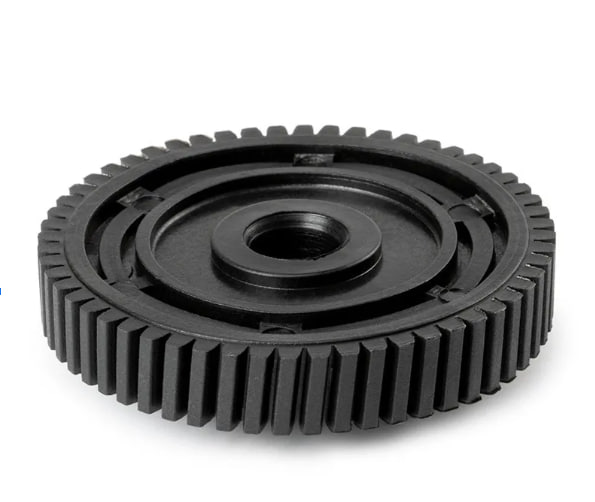
Automotive (load-bearing assemblies): engine brackets, suspension links, pedal levers, gear selector levers, control unit housings, transmission guards, oil pump pans.
Industrial equipment: structural machine-tool parts, precision pump housings, bases for measuring and control equipment, protective covers for gearboxes and drives.
Agricultural machinery: header parts, sprayer housings, seeder components, drive covers, mounting brackets for auxiliary equipment.
Power tools: structural housings for cordless and corded power tools, gearbox protection elements, motor and spindle mounts.
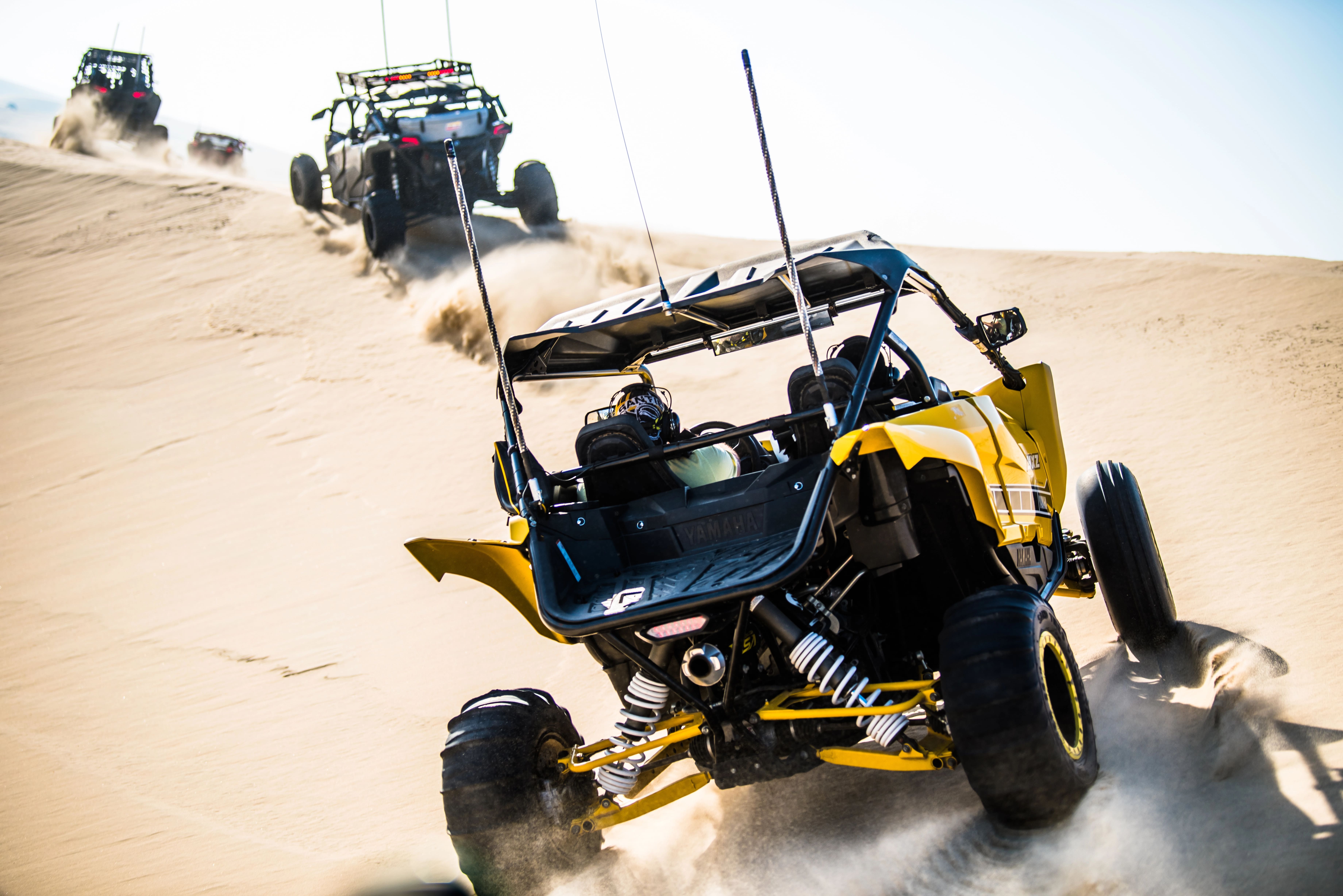
Sports and defense (secondary structures): sports equipment frames, protective elements of tactical gear, mounting brackets, housings for auxiliary electronics (with verification of FR requirements).
Global equivalents
Parametrically comparable PA66 GF50 grades: DuPont Zytel® 70G50HSLR / 70G50HSLA, BASF Ultramid® A3WG10 / A3X2G10, Ascend Vydyne® R533H, Toray Amilan® CM3001-G50, DOMO Domamid® 6F50, Radici Radilon® A RV500W, Lanxess Durethan® AKV 50. Examid® PA66 GF50 is offered as a localized alternative with flexibility in batch size (from 25 kg), color, heat-stabilizer type and optional FR packages.
The stated values are measured by in-house methods close to the corresponding ISO and GOST standards. This information is for reference only and does not constitute an official batch data sheet. Please request the TDS and MSDS for a specific batch before industrial use.