
PA6 GF30 — glass-filled polyamide 6 with 30% glass fiber
Glass-filled polyamide 6 for molding technical parts: housings, brackets, levers, holders. It provides stiffness, low shrinkage, and dimensional repeatability in series production — where unfilled PA6 can no longer hold its shape.
Material Wizard supplies the Examid® PA6 GF30 / PA6 GF30 grade line and selects the right grade for a specific part, mold, and molding process.
- Matrix
- Polyamide 6 (PA6 / nylon 6)
- Filler
- 30 wt% short glass fiber
- Processing method
- Injection molding
- Typical applications
- Housings, brackets, levers, holders, technical assemblies
- Available grades
- 6 solutions: GF30, HI, LM, 62100i, LGF30, GF20/CF10
- Supply format
- Pellets
- Equivalent grade selection
- By grade name, drawing, or operating conditions
- Documents
- TDS / SDS / technical consultation
30% glass fiber — the factor that changes the behavior of polyamide 6
It is precisely 30% by weight of short glass fiber in the PA6 polyamide matrix that increases the modulus of elasticity several times over, reduces shrinkage, and ensures dimensional stability — without loss of processability in injection molding. This is the characteristic balance point for PA6 GF30 and glass-filled nylon 6 GF30 grades.
What is PA6 GF30
PA6 GF30 is polyamide 6 containing 30% by weight of short glass fibers. In English-language sources: polyamide 6 with 30% glass fiber, glass-filled nylon 6 GF30.
Glass fiber acts as a reinforcing framework. It carries the load, holds shape under pressure, and reduces shrinkage during cooling. The polyamide matrix provides processing flow, adhesion to the glass fiber, basic chemical resistance, and the ability to form a stable crystalline structure after cooling.
In practice, PA6 GF30 is chosen in two cases:
- unfilled PA6 does not provide the required stiffness or dimensional stability;
- the assembly requires a transition from a metal part to a polymer part while retaining functionality, following design recalculation and confirmation through testing.
When PA6 GF30 is chosen
PA6 GF30 is not a universal substitute for base polyamide, but a tool for specific tasks. Typical selection scenarios:
- the part must hold its shape under mechanical load, and unfilled PA6 proved too pliable;
- there is a need to reduce molding shrinkage and post-cooling deformation, especially in geometrically complex products;
- metal replacement is required — aluminum, silumin, steel — in moderately loaded parts of an assembly;
- the part operates within a mechanical or electromechanical assembly where dimensional repeatability and stability of properties over time are important;
- production is serial, with requirements for molding cycle, repeatability, and batch-to-batch defect control;
- there are requirements for creep resistance under prolonged static load;
- the part has stiffening ribs, mounting zones, and mating surfaces, and must retain its geometry during assembly.
Key advantages of PA6 GF30
- high stiffness — a modulus of elasticity several times higher than unfilled PA6;
- increased tensile and flexural strength, allowing wall thickness of the product to be reduced;
- dimensional stability — lower shrinkage, reduced tendency to warp, and more predictable part geometry during long-term operation and temperature fluctuations;
- lower shrinkage compared to unfilled PA6, especially in the direction of melt flow;
- better creep resistance under prolonged static load;
- processability in injection molding — a wide range of grades for different geometries and processing regimes;
- ability to modify for the task at hand: impact strength, cold resistance, laser marking, thermal stabilization, color range.
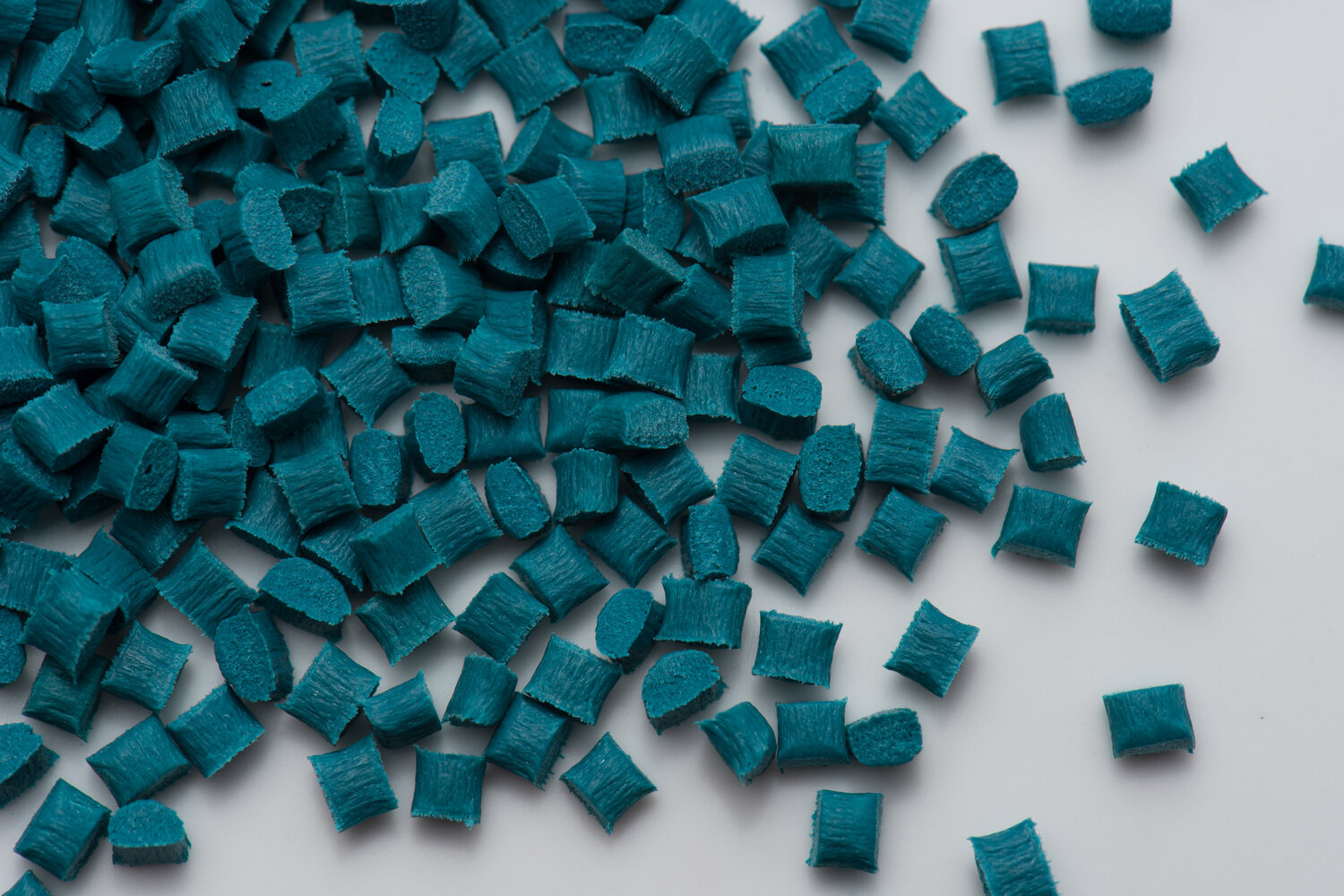
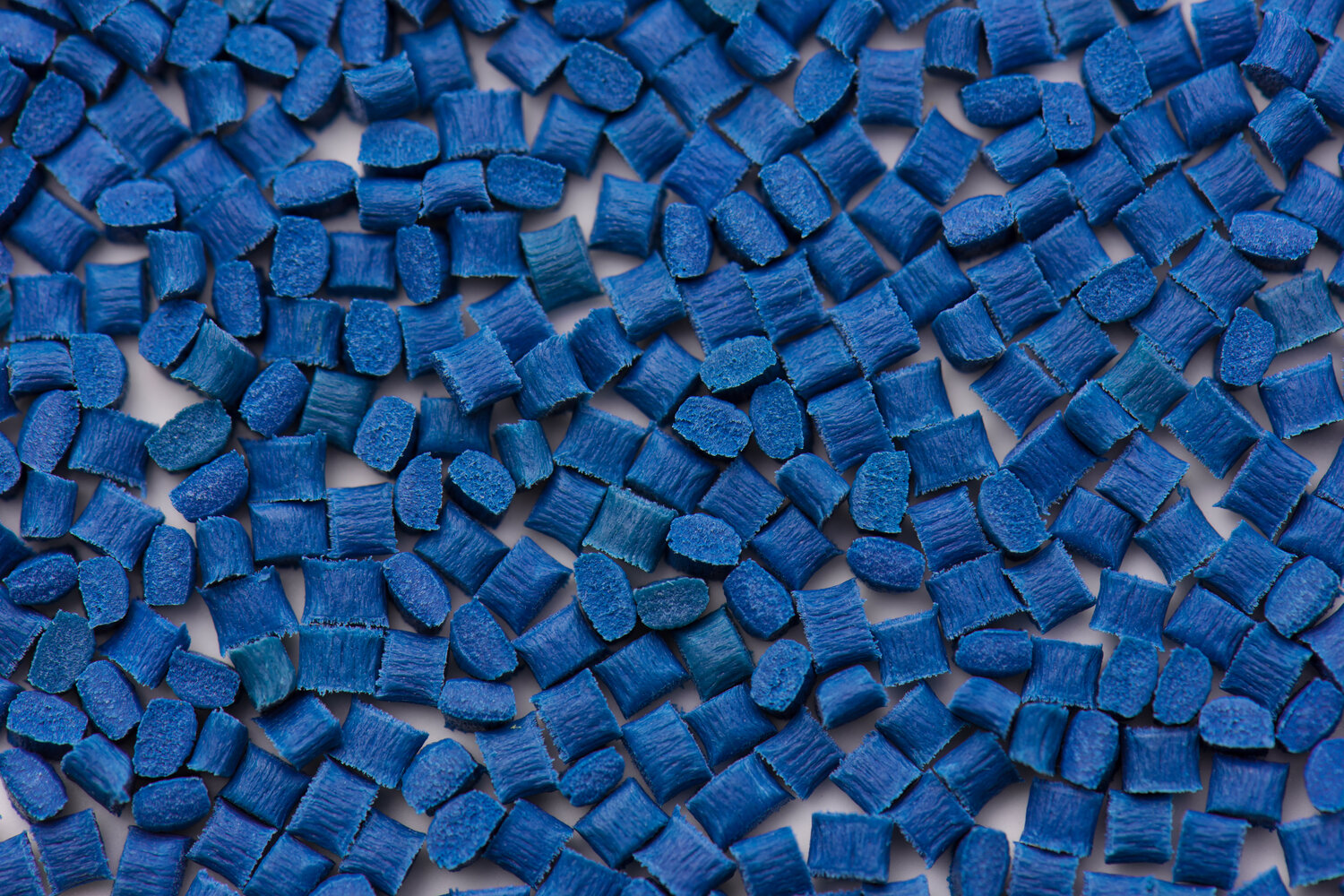
Examid® PA6 GF30 grades from Material Wizard
Examid® is Material Wizard's product line of glass-filled polyamides. This page presents six solutions based on glass-filled PA6: four core PA6 GF30 grades for different operating conditions, and two related modifications addressing the needs of increased impact strength, cold resistance, reduced shrinkage, and more stable part geometry.
Examid® PA6 GF30
Universal
Base grade for general-purpose structural parts.
Brackets, housings, holders, technical fittings. Classic PA6 GF30 without additional modifications.
Learn more about the grade →Examid® PA6 GF30 HI
Impact-resistant
Modified for impact strength and cold-temperature behavior.
Tool housings, levers, transport, unheated equipment. Withstands −60 °C.
Learn more about the grade →Examid® PA6 GF30 LM
Laser marking
Black, thermally stabilized PA6 GF30 for laser engraving.
QR code, serial number, batch marking, logo. Contrasting, repeatable results across the series.
Learn more about the grade →Examid® PA6 GF30 62100i
Cold-resistant
Specialized grade for operation at low temperatures.
Outdoor assemblies, transport, agricultural sector, operation at −30 °C.
Learn more about the grade →Examid® PA6 LGF30
Long glass fiber
PA6 with long glass fibers (LGF) instead of short ones (SGF) — higher impact strength and stiffness at the same 30% filler content.
Parts under impact load, metal replacement, tool housings, levers, load-bearing structural elements.
Learn more about the grade →Examid® PA6 GF20/CF10
GF + CF
Dual reinforcement: 20% glass fiber + 10% carbon fiber. Delivers high stiffness, low shrinkage, and increased cold-impact resistance.
Outdoor assemblies, housings, covers, flanges, guides, and parts where stiffness, cold resistance, low shrinkage, and impact resistance all matter simultaneously.
Learn more about the grade →Properties of Examid® PA6 GF30 grades
A summary technical table of six solutions — quick access without navigating to individual pages. Values correspond to the TDS published on the Material Wizard website and serve as a guide for preliminary selection. For series production, parameters are confirmed by the current technical data sheet of the specific grade.
| Parameter | PA6 GF30 | PA6 GF30 HI | PA6 GF30 LM | PA6 GF30 62100i | PA6 LGF30 | PA6 GF20/CF10 |
|---|---|---|---|---|---|---|
| Physical properties | ||||||
| Density, g/cm³ | 1.36 | 1.32 | 1.42 | 1.31 | 1.32 | 1.30 |
| Reinforcing filler content, % | 30 (GF) | 30 (GF) | 30 (GF) | 30 (GF) | 30 (long GF) | 20 + 10 (GF + CF) |
| Water absorption / moisture absorption, % | 5.5 / 2.0 | 5.5 / 2.0 | 5.5 / 2.0 | 5.5 / 2.0 | 6.0 / 2.0 | 5.9 / 2.0 (saturation / 50% RH, 23 °C) |
| Rheological | ||||||
| MVR / MFR | ≥30 g/10 min 275 °C, 5 kg |
8 / 12 g/10 min 250 / 270 °C, 2.16 kg |
12 g/10 min 235 °C, 2.16 kg |
20 g/10 min | 18 g/10 min | 35 cm³/10 min ISO 1133-1 |
| Shrinkage, longitudinal / transverse, % | 0.3 / 0.5 | 0.2 / 0.4 | 0.25 / 0.45 | 0.25 / 0.45 | 0.2 / 0.4 | 0.3–0.35 / 0.4–0.45 |
| Mechanical | ||||||
| Tensile strength at break, MPa | 178 | 160 | 150 | 150 | 220 | 185 |
| Elongation at break, % | 3.6 | 4.5 | 6.0 | 4.0 | 5.0 | 2 |
| Flexural strength, MPa | 260 | 200 | 240 | 220 | 280 | 250 |
| Flexural modulus, MPa | 8 800 | 7 000 | 7 500 | 7 000 | 8 000 | 12 000 |
| Unnotched Charpy impact +23 °C, kJ/m² | 85 | 70 | 85 | 100 | 120 | 80 |
| Notched impact +23 °C, kJ/m² | 16 (Izod) | 20 (Charpy) | 14 (Charpy) | 21 (Charpy) | 70 (Charpy, +23 °C) | 15 (Charpy) |
| Notched impact at low temperature, kJ/m² | 11 (Izod, −30 °C) | 16 (Charpy, −40 °C) | 12 (Charpy, −30 °C) | 20 (Charpy, −30 °C) | 25 (Charpy, −30 °C) | 10 (Charpy, −30 °C) |
| Thermal | ||||||
| Melting temperature, °C | 220 | 220 | 220 | 222 | 220 | 220 |
| HDT 0.45 MPa, °C | 215 | 215 | 215 | 215 | 215 | 215 |
| HDT 1.8 MPa, °C | 200 | 190 | 195 | 200 | 205 | 200 |
| Cold resistance, °C | −30 | −60 | −30 | −30 | −40 | −30 |
| Electrical | ||||||
| Surface resistivity, Ω | 10¹³ | 10¹³ | 10¹³ | 10¹³ | 10¹³ | 10¹² |
| Volume resistivity | 10¹⁵ Ω·cm | 10¹² Ω·m | 10¹³ Ω·m | 10¹³ Ω·m | 10¹³ Ω·m | 10¹² Ω·m |
| Special features | ||||||
| Color (standard) | Natural | Natural | Black | Natural | Natural | Black |
| Laser marking | no | no | yes | no | no | no |
| Cold impact resistance | basic | enhanced | basic | high | enhanced | high |
How to choose the right PA6 GF30 grade
General guidance for selecting a grade for a typical application. The final decision is made after analyzing the drawing, operating conditions, and budget.
| Product application | Recommended grade | Reason for selection |
|---|---|---|
| Universal technical part, structural assembly | Examid® PA6 GF30 | Base glass-filled PA6 without additional modifications. Optimal balance of stiffness and processability. |
| Impact loads, vibration, cyclic operation | Examid® PA6 GF30 HI | Increased impact strength, performs more reliably where impact failure is a risk. |
| Laser marking, QR code, serial number on the housing | Examid® PA6 GF30 LM | Specially adapted black compound for high-contrast laser engraving. |
| Operation at low and sub-zero temperatures | Examid® PA6 GF30 62100i | Adapted formulation to preserve impact properties in cold conditions. |
| Increased impact resistance and load-bearing capacity at the same 30% filler content | Examid® PA6 LGF30 | Long glass fiber better preserves the reinforcing effect in loaded structural parts. |
| Complex geometry, risk of warping, requirement for more isotropic shrinkage | Examid® PA6 GF20/CF10 | Hybrid reinforcement of 20% glass fiber and 10% carbon fiber yields a stiffer, more geometrically stable solution compared to classic PA6 GF30. |
| Higher heat resistance, prolonged operation at elevated temperatures | Consider Examid® PA66 GF30 or Examid® PPA GF | Examid® PA6 GF30 in continuous-duty operation requires verification against load, humidity, and part service life. The solution is selected after consultation with Material Wizard. |
Compare PA6 GF30 with other glass-filled polyamides
Select 2–3 materials to see a normalized property profile and key TDS parameters. This is a preliminary selection tool, not a substitute for the TDS.
Radar chart comparing materials
How to read this: 7 axes are normalized from 0 to 100 (stiffness, strength, heat resistance, impact resistance, moisture stability, moldability, cost efficiency). This is a selection profile based on typical properties and grade positioning, not exact TDS figures. Exact values are given in the TDS of the specific grade.
Show full grade specification table (complete list)
| Class / grade | When to choose | Advantage | Limitation |
|---|---|---|---|
| Examid® PA6 GF10 / Examid® PA6 GF20 | the part does not require maximum stiffness | more processable in molding, lower abrasiveness | lower modulus and strength |
| Examid® PA6 GF20/CF10 | complex geometry, flat walls, isotropic shrinkage required | better surface quality, better shrinkage isotropy, low warpage | higher cost and different shrinkage behavior due to hybrid 20% GF + 10% CF reinforcement |
| Examid® PA6 GF30 | central task, balanced requirements | optimal balance of price / stiffness / processability | limited HDT, moisture sensitivity |
| Examid® PA6 GF30 HI / LM / 62100i | special PA6 GF30 modifications | impact, laser marking, cold resistance — individual grades within the line | everything stays within the PA6 GF30 "envelope" |
| Examid® PA6 GF50 R10 | high stiffness on a PA6 basis is required | modulus ~16,500 MPa, metal replacement on a PA6 basis | more difficult molding, +25% part weight, higher abrasiveness |
| Examid® PA66 GF30 | increased heat resistance | HDT 240 °C, continuous use temperature 150 °C | more expensive, narrower processing window |
| Examid® PA66 GF50 | maximum stiffness + heat resistance | modulus ~16,800 MPa, HDT 250 °C | highest part weight, abrasiveness |
| Examid® PA610 GF30 (PA 610 KS) | moisture behavior and service life are critical | water absorption ~3%, service life >50 years | more expensive, niche application |
| Examid® PPA GF | PA6/PA66 can no longer withstand conditions — engine, high T | continuous use temperature 170–200 °C, water absorption 0.15–0.5% | expensive class, processing 290–330 °C, drying 4–8 h |
Selection logic
- Examid® PA6 GF30 — the baseline reference point: balance of price, stiffness, and processability.
- Examid® PA6 GF50 — greater stiffness, but more difficult molding and higher abrasiveness.
- Examid® PA66 GF30 — higher heat resistance and stability under sustained thermal load.
- Examid® PA66 GF50 — maximum stiffness and heat resistance for loaded parts, after engineering design review.
- Examid® PA610 GF30 — critical moisture behavior, dimensional stability, service life, dielectric properties.
- Examid® PPA GF — when PA6 and PA66 cannot withstand the temperature or creep requirements.
Material Wizard selects the material for the task, not just by polymer name. Sometimes PA6 GF30 with an optimized mold performs better than a more expensive PA66 GF30 used without a design review.
PA6 GF30 versus unfilled PA6
These are different materials for different engineering tasks.
Unfilled PA6 is better suited where toughness, damping, and the ability to absorb impact without reinforcement are required.
PA6 GF30 is chosen when the part must hold its geometry under load, have lower shrinkage, and better dimensional stability across a production run.
Glass fiber reduces molding shrinkage but increases melt abrasiveness and creates property anisotropy. Therefore, switching from unfilled PA6 to PA6 GF30 requires a review of the design, gating system, and molding conditions.
PA6 GF30 or PA66 GF30
PA6 GF30 and PA66 GF30 have different crystalline structures, melting temperatures, water absorption, and mold behavior. They should not be substituted for one another based solely on similarity of designation.
When to choose PA6 GF30
- moderate temperature range — approximately up to 80 °C continuous;
- series-production economics are important;
- a wider molding process window is required;
- the part does not operate under critical thermal load.
When to choose PA66 GF30
- elevated operating temperature;
- sustained thermal load;
- high stiffness under heating;
- better creep resistance in a thermal environment.
In practice, the choice depends on operating temperature, load type, humidity, service life, part geometry, and budget.
Material Wizard selects the material for the task, not just by polymer name. Sometimes PA6 GF30 with an optimized mold performs better than a more expensive PA66 GF30 used without a design review.
Typical applications of PA6 GF30
Glass-filled polyamide 6 with 30% glass fiber is used in series-produced technical parts that require stiffness, dimensional stability, and geometric repeatability.
- structural brackets and load-bearing elements of technical assemblies;
- housings for tools, household and industrial equipment;
- holders, fasteners, mounting components with dimensional repeatability requirements;
- levers and mechanical transmissions under moderate load;
- technical hardware, connecting elements, mating surfaces;
- electrical components — housings, busbar holders, insulating elements;
- automotive and transport parts — under-hood components, interior, assemblies;
- equipment, pump, and ventilation system parts;
- hand and power tool parts — housings, handles, panels;
- parts with stiffening ribs, mounting bosses, and integrated functional zones.
Processing PA6 GF30 by injection molding
Molding PA6 GF30 requires control of three factors: moisture content of the polyamide matrix, glass fiber abrasiveness, and fiber orientation within the mold.
- Hygroscopicity of the matrix — PA6 absorbs moisture, so the pellets must be dried before molding;
- Glass fiber abrasiveness — glass fiber wears the screw, nozzle, hot runners, and mold working surfaces;
- Fiber orientation — affects shrinkage, warpage, and anisotropy of mechanical properties.
Temperature profile
Approximate temperature profile per the TDS of Examid® PA6 GF30 6208. Pellets enter the hopper, pass through the barrel heating zones, the adapter and the nozzle, and then enter the mold as finished melt. Final settings are refined by the process engineer for the specific part and mold.
Source: TDS Examid® PA6 GF30 6208 · Material Wizard
Mold and process parameters
- Mold temperature80–100 °C — optimal crystallization and dimensional stability
- Injection pressure80–120 MPa
- Injection speedMedium–high
- Regrind contentUp to 25% without significant loss of properties
- Drying90 °C, 2–8 h to moisture content < 0.1%
Drying and moisture control
Polyamide 6 is a hygroscopic material. The pellets must be dried before molding: moisture in the melt causes hydrolysis, surface defects, bubbles, and a drop in the mechanical properties of the finished part.
Equipment wear
Glass fiber is abrasive to surfaces in contact with the melt: screw, barrel, nozzle, hot runners, and mold.
Gating system and flow direction
Gate location and melt flow direction determine the orientation of glass fibers in the molded part. This affects shrinkage, possible part warpage, and anisotropy of mechanical properties.
When it is better not to choose PA6 GF30
Expert honesty matters more than a sale: below are real scenarios in which PA6 GF30 is not the optimal material.
- the part operates at an elevated temperature for a prolonged period — consider PA66 GF30 or PPA GF;
- maximum impact toughness without brittle failure is required — consider impact-modified grades or PC/ABS instead;
- the assembly operates in a humid environment while dimensional stability is critical for the part;
- very low deformation under heating is required — consider switching to PBT GF30 or PPA GF;
- there is a UL-94 V-0 flame-resistance requirement — standard PA6 GF30 is rated HB, so a special flame-retardant grade is required;
- the mold is not adapted for an abrasive material.
Common mistakes when selecting PA6 GF30
The most frequent situations that lead to scrap, complaints, or problems during series production launch:
- selecting based solely on the "PA6 GF30" designation without considering impact toughness, heat stabilization, flow properties, and dimensional stability;
- ignoring pre-molding drying;
- replacing PA66 GF30 with PA6 GF30 without evaluating operating temperature and load duration;
- underestimating glass fiber abrasiveness;
- expecting identical behavior from materials of different suppliers carrying the same GF30 designation;
- making a decision without a test in the actual mold;
- economizing on the grade without checking the design requirements.
Why PA6 GF30 from different suppliers behaves differently
The same "PA6 GF30" designation can cover materials with markedly different characteristics. Key factors of difference:
- Glass fiber type and length. Short, long, or chopped fiber behaves differently in the melt and affects mechanical properties differently.
- Fiber-matrix adhesion. Sizing quality and interaction with the polymer are important.
- Compounding quality. Fiber distribution and the absence of agglomerates matter.
- Stabilization. Thermal, light, and hydrolytic stabilization are determined by the additive package.
- Polyamide matrix viscosity. The base PA6 may have a different molecular weight distribution.
- Batch-to-batch stability. Repeatability from batch to batch is important for series production.
What to send for PA6 GF30 selection
The more precise the input data, the faster Material Wizard can select the grade, an equivalent, or an alternative engineering plastic.
- Name of the current material or TDS — if there is something to replace.
- Drawing or photo of the part — to assess geometry, stiffening ribs, and mating surfaces.
- Operating temperature — range and duration.
- Load type — static, impact, cyclic, or vibrational.
- Impact strength requirements — drops, impacts, contact with hard surfaces.
- Laser marking — required or not, type of characters.
- Defects in the current material — warpage, cracking, unstable dimensions.
- Target price level — so as not to propose grades outside the budget.
Selecting a PA6 GF30 equivalent
Material Wizard selects an equivalent glass-filled polyamide based on the name of the current grade, TDS, part drawing, molding defects, or operating conditions.
- selection of a direct or functional equivalent;
- evaluation of geometry, load, and mating surfaces;
- analysis of molding defects — warpage, cracking, surface defects;
- selection by temperature, load, environment, and service life;
- selection by target cost;
- selection by requirements for impact strength, stiffness, color, marking, and cold resistance.
PA6 GF30 equivalents from well-known manufacturers
Material Wizard selects functional equivalents of PA6 GF30 to replace imported glass-filled polyamides in series production.
- replacement for Ultramid® B3WG6, Ultramid® B3EG6, and other PA6 GF30 grades from BASF;
- replacement for Durethan® BKV30, Durethan® BKV30H2.0 from LANXESS;
- replacement for Akulon® K224-G6, Akulon® K224-PG6 from Envalior, formerly DSM;
- replacement for Technyl® A 218 V30, Technyl® C 218 V30 from Domo Chemicals, formerly Solvay;
- replacement for Radilon® S RV300, Radilon® S RV300W from Radici Group;
- replacement for Grilon® TSG-30/4, Grilon® BG-30 S from EMS-GRIVORY;
- replacement for local and Asian PA6 GF30 grades — selection based on TDS, drawing, or molding defects.
The trademarks named belong to their respective owners. Material Wizard performs functional selection based on operating conditions and does not claim full chemical identity of the materials.
Frequently asked questions about PA6 GF30
What is PA6 GF30?
PA6 GF30 is polyamide 6 reinforced with 30% by weight of short glass fibers. The composite has higher stiffness, strength, and dimensional stability compared to unfilled PA6.
How does PA6 GF30 differ from standard PA6?
Glass fiber forms a reinforcing framework, increases the modulus of elasticity, reduces shrinkage, and improves dimensional stability.
Can PA66 GF30 be replaced with PA6 GF30?
Only after checking the temperature, load, humidity, and service life of the part. PA66 GF30 is typically chosen for higher operating temperatures.
Is PA6 GF30 suitable for cold conditions?
For operation in cold conditions, cold-resistant modifications are chosen — Examid® PA6 GF30 HI or Examid® PA6 GF30 62100i.
Which PA6 GF30 grade is suitable for laser marking?
Examid® PA6 GF30 LM is a black, heat-stabilized compound for high-contrast laser engraving.
Are all PA6 GF30 grades the same?
No. They differ in glass fiber type, adhesion, stabilization, matrix viscosity, additive package, and batch-to-batch stability.
PA6 GF30 selection for your production
Send the name of the current material, the part drawing, or a description of the operating conditions. Material Wizard will select an Examid® PA6 GF30 grade or propose an alternative engineering plastic, taking into account the part, mold, molding conditions, and series-production economics.
Select a grade technical datasheet
PDF files open directly. For precise grade selection, you can send a request with the name of the current material, the part drawing, or the operating conditions.