Products and services
High-viscosity extrusion polyamide Promyde BF840
Description
Promyde® BF840 is an experimental copolyamide with a reduced melting temperature and a high renewable-raw-material content. Bio-based carbon content: 53.3 ± 0.17 % (ASTM D6866-21, method B). The base molecule is derived from plant sources that do not compete with food agriculture (unlike corn-based PLA) — typically sebacic acid from castor oil and other technical bio-components.
Developed specifically for cast and blown film extrusion as a bio-based alternative to standard PA film grades. It combines three parameters critical for film: high transparency (minimal light refraction and haze), a reduced melting temperature (155–160 °C — 60–65 °C lower than a PA6 film grade, which cuts processing energy costs) and a low crystallization rate (low curl and stable film geometry on high-speed lines).
Typical parameters: density ~1.12 g/cm³, melting temperature 155–160 °C (Tm), Tg ≈ 40–50 °C, water absorption ~3.5 % at saturation (significantly lower than PA6 at ~9 %). Oxygen barrier — on the order of 30–60 cm³·µm/(m²·day·bar) at 23 °C / 50 % RH (typical of PA copolymer film), i.e. 200–500 times better than LDPE and 50–100 times better than PP.
Key advantages
- 53 % bio-based carbon (ASTM D6866-21) — a documented reduction of the packaging carbon footprint; a contribution to brand ESG metrics (Scope 3 emissions)
- Does not compete with food agriculture — technical-grade bio feedstock (castor oil, lignocellulose), removing the food-vs-fuel criticism
- High film transparency — visual inspection of the contents, premium packaging appearance
- Low Tm (155–160 °C): lower extrusion energy consumption vs standard PA6 (220 °C), plus the option of co-extrusion with PE/PP on the same line
- O₂ and CO₂ barrier 200–500 times better than PE — extended shelf life for oxidation-sensitive products
- Low crystallization rate — stable blown-film geometry, no curl on cooling
- Suitability for food contact (after appropriate certification of the finished article to FDA / EU 10/2011)
- Compatible with co-extrusion with PE, PP, EVOH and ionomer for multilayer structures
Limitations and nuances (for engineering planning)
- Experimental status: batch volumes are limited and MOQ and lead time require individual agreement; not for continuous mass production without a prior contract
- The reduced Tm of 155–160 °C limits the heat resistance of the finished film — not for hot filling above 100 °C or retortable packaging
- High gas-barrier potential, but humidity-dependent: above 80 % RH the O₂ barrier drops 3–5 times; for humid environments a multilayer structure with EVOH is recommended
- Base flammability rating is UL 94 V-2 / HB (standard for a PA6 copolymer; not for FR-critical packaging applications requiring V-0)
- Bio-films often require separate compostability certification (EN 13432) — standard Promyde® BF840 is not compostable; bio-based and compostable are different concepts
Applications
- Flexible packaging with brand ESG labeling: packaging for premium food products (meat, cheese, nuts, coffee) where the brand is positioned as sustainability-driven (brands of the Whole Foods / Carrefour Bio class, domestic premium retailers)
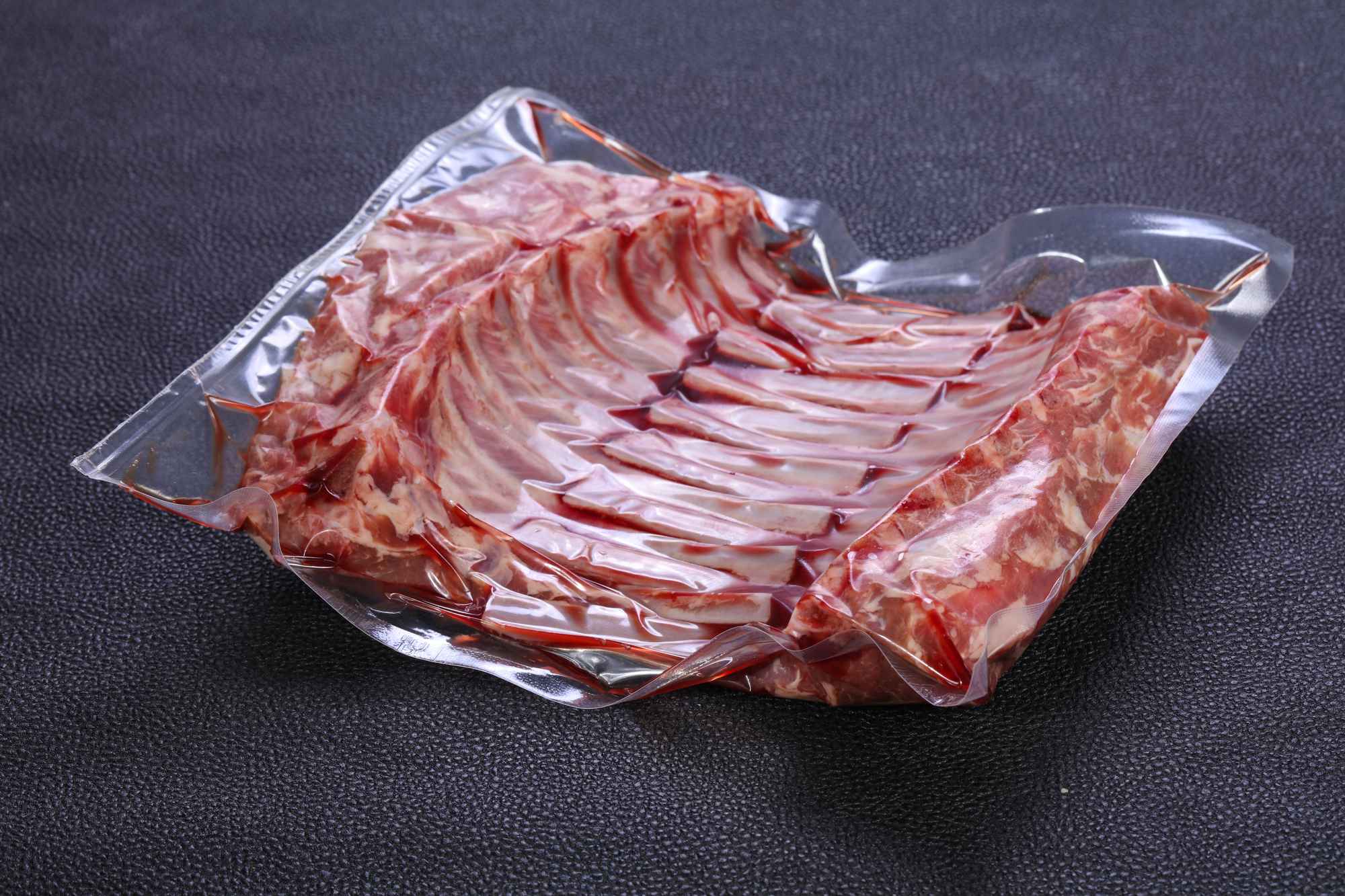
- Barrier films for fresh produce: vacuum packaging of meat and cheese, modified atmosphere packaging (MAP) — shelf life extended 2–3 times
- Multilayer co-extruded films: Promyde® BF840 as the intermediate barrier layer in PE/PA/PE and PET/PA/PE structures — for packaging with barrier requirements
- Sterile medical packaging: blisters and thermoformed films for medical devices with bio-based positioning (a 2024–2026 trend)
- Industrial films with ESG labeling: packaging for luxury perfumery, cosmetics and premium electronics, where the packaging is part of the brand promise
- Sustainability-trial pilot projects: for brands testing the transition from PE/PET to bio-based alternatives
Global equivalents: DSM EcoPaXX® Q170 (PA410, ~70 % bio-based), Arkema Rilsan® B (PA11, ~100 % bio-based from castor oil), BASF Ultramid® Balance (PA610, ~40 % bio-based). Each equivalent has its own melting point and barrier characteristics — the choice is determined by the processing temperature and end-use requirements.
The stated values are measured by in-house methods close to the corresponding ISO and GOST standards. This information is provided for reference only and is not an official batch data sheet. Before industrial use, please request the TDS and MSDS for the specific batch. Commercial use of this experimental material requires separate agreement with MW.