
Products and services
20% Carbon Fiber Polyketone for Tribological Parts — Exablend® POK CF20 S
Description
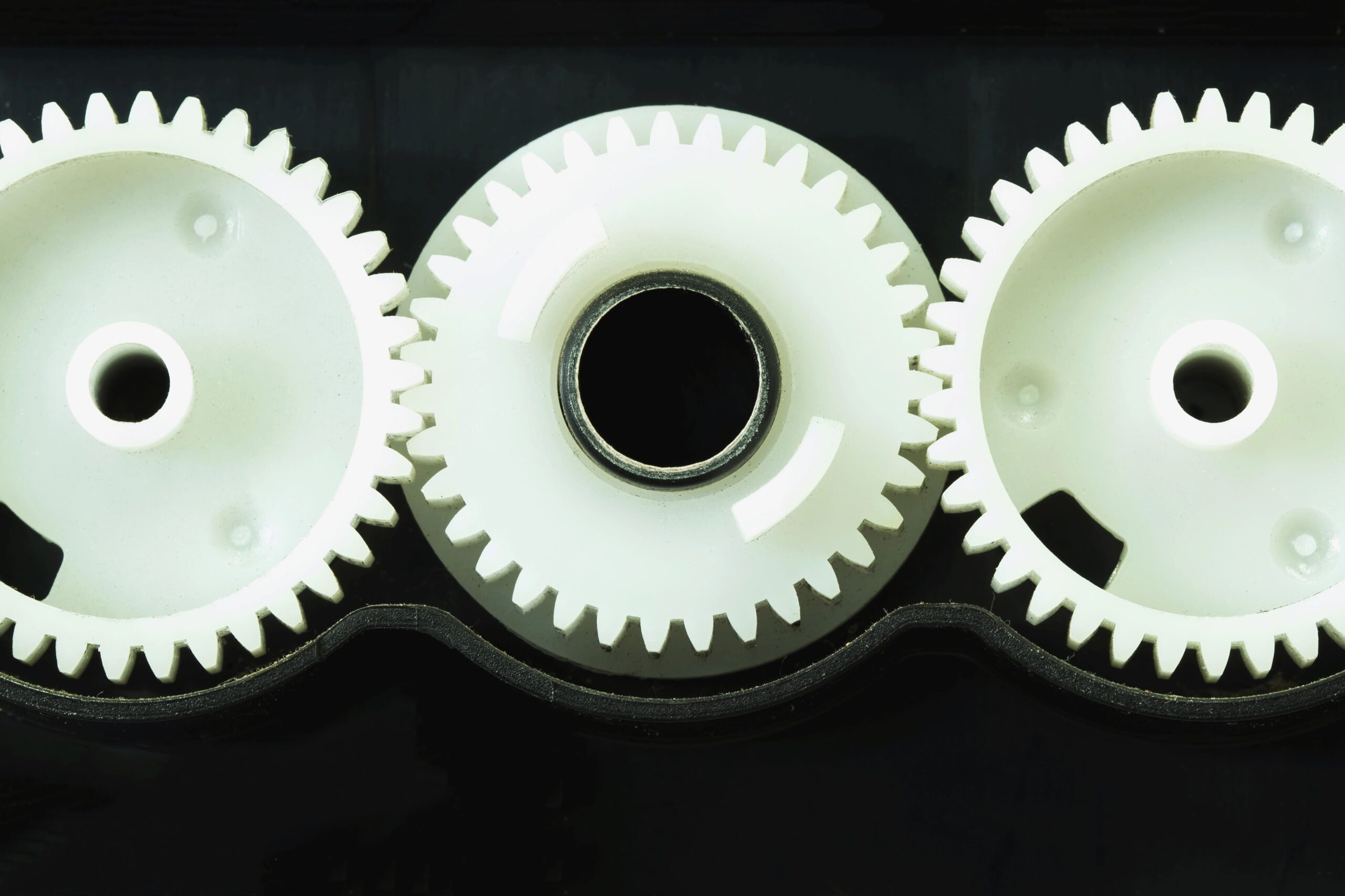
Exablend® POK CF20 S is a 20% carbon fiber-reinforced, tribologically modified polyketone. A compound for injection-molded precision parts requiring high stiffness (tensile modulus of 12,700 MPa), dimensional stability and controlled electrical conductivity: surface resistivity of ~10³ Ω enables use in static-dissipative assemblies, including fuel-system components.
The key advantage over carbon-filled PA66 CF is moisture uptake of just 0.4% (23 °C, 50% RH): part geometry and mechanics remain stable in humid environments — critical for precision friction pairs and seals. The chemical resistance of the polyketone matrix to fuels and aggressive media completes the profile.
HDT of 213 °C at 1.8 MPa and a melting point of 220 °C support service in hot zones. Processing is standard for POK: melt 235–250 °C, mold 80 °C, pressure 80–130 MPa.



FAQ
Why is POK CF20 better than carbon-filled PA66 CF for precision parts?
Moisture uptake of 0.4% vs 1.5–2% for PA66 CF: dimensions and stiffness are humidity-independent, no conditioning required.
Is the material suitable for static-dissipative parts?
Yes, surface resistivity of ~10³ Ω is in the static-dissipative range, suitable for fuel systems and electronics.
What is the chemical resistance of polyketone?
POK resists fuels, oils and many aggressive media — outperforming PA66 and POM in fuel applications; verify resistance to specific media by testing.