Products and services
Ultraplen® PP — Base Modified Polypropylene Homopolymer
Description
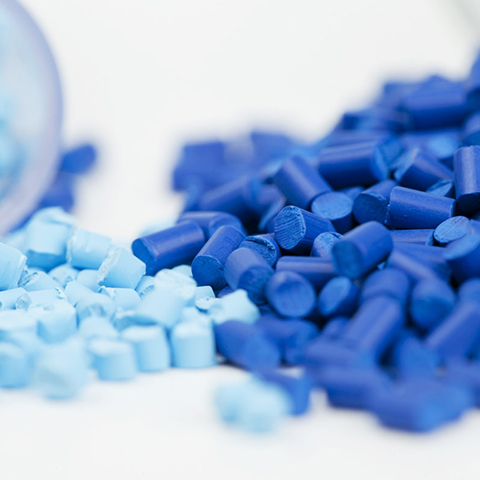
Ultraplen® is the in-house PP compound line of Material Wizard: modified polypropylene compositions with improved rheology, an extended processing temperature window and an optimized stiffness/elasticity balance for injection molding and extrusion.
The base grade Ultraplen® PP (unfilled homopolymer) is presented in this card. It combines the high clarity of its spherulitic structure, a low density of 0.90 g/cm³ and resistance to deformation under flexural loading. It is used both as a stand-alone structural material and as the polymer matrix for specialized filled Ultraplen® grades.
Full Ultraplen® line (current catalog)
- Ultraplen® PP — base unfilled modified homopolymer (this card)
- Ultraplen® 530 — 30 % glass-filled (GF), a replacement for glass-filled PA in technical parts
- Ultraplen® PP GF30/4164 — 30 % glass-filled copolymer for pipe and engineering applications
- Ultraplen® PP LGF55 — 55 % long glass fiber masterbatch (let-down ratio up to 1:3)
- Ultraplen® PPMF40 — 40 % talc mineral-filled, increased stiffness and heat resistance
- Ultraplen® 600 — self-extinguishing PP with an FR package for electrical enclosures
Advantages
- High physical and mechanical performance at low density (~0.9 g/cm³ — lighter than water)
- Improved surface quality of molded parts: matte or glossy finish as required
- Rheologically optimized — no sink marks or warpage in thick-walled parts
- Good stiffness/elasticity balance — withstands impact loads without brittle failure
- Compatible with compatibilizers and fillers for further modification
- Low water absorption (<0.02 %) — dimensional stability in any climatic conditions
- Environmentally safe: complies with EU 10/2011 for food contact (no FR packages or plasticizers in the base formulation)
Limitations — honestly
- Lower heat resistance than PA or PPS — service range up to 100–110 °C (continuous)
- UV-unstable in the base formulation — outdoor applications require a UV-stabilized grade (HALS package)
- Sensitive to oxidation in long-term service above 90 °C without an antioxidant package
- Limited resistance to strong oxidizers, concentrated acids and aromatic hydrocarbons
- For structural stiffness above a 1.5 GPa modulus, use Ultraplen® 530 (GF30) or Ultraplen® PPMF40
- The base grade is rated HB per UL 94 — for V-0/V-2 choose Ultraplen® 600
Target applications
Packaging and containers: technical crates, buckets, logistics containers, IBC lids, thin-wall injection-molded packaging.
Home appliances: housing parts for washing machines and small kitchen appliances, fan and vacuum cleaner components.
Industry: dispensing systems (where water contact is permitted), cold-water supply fittings, technical covers and housings.
Automotive (interior): decorative trim, holders, cabin hardware components, vents for climate-control systems (NOT for under-hood applications — PA or PPS is used there).
Agriculture: irrigation system parts, greenhouse equipment components (with a UV additive).
Global counterparts
Parametrically comparable base PP homopolymers: LyondellBasell Moplen® HP500N / HP400V (injection molding), SABIC PP 575P, Borealis Borform™ HD120MO, TotalEnergies Lumicene® MR2002. Ultraplen® PP is offered as a localized alternative with flexible batch sizes (from 25 kg), flexible lead times and the option of tailoring to a specific application (MFR, color, UV/FR packages).
The stated values are measured by internal methods close to the corresponding ISO and GOST standards. This information is for reference only and is not an official batch data sheet. Please request the TDS and MSDS for a specific batch before industrial use.