Products and services
Kraton® D1101 — linear SBS triblock copolymer, global reference grade
Description
Kraton® D1101 — a linear SBS triblock copolymer produced by Kraton Corporation, the global reference grade for the entire category of styrene-butadiene-styrene thermoplastic elastomers. It contains ~31 % bound styrene, has a linear S-B-S architecture and a molecular weight Mw of ~77–79 kDa. It is the “gold standard” against which international test standards and comparative tables of competing compounds benchmark all linear SBS grades.
Why D1101 is the global reference
In the markets of polymer-modified bitumen (PMB), HMA/PSA adhesives, shoe soles and polystyrene impact modification, D1101 is the benchmark grade — every road engineer, adhesive formulator and compounder looks for “D1101 equivalence” when selecting an SBS component. The competitive positioning of any other linear SBS is built through comparison with D1101 by styrene %, Brookfield viscosity of a 25 % toluene solution and Shore A.
Typical parameters (per Kraton TDS)
- Architecture: linear S-B-S triblock
- Bound styrene content: ~31 %
- Molecular weight Mw: ~77–79 kDa
- Brookfield viscosity, 25 % toluene solution (25 °C): ~4000 cP
- Shore A (compression-molded plaque): ~72
- Tensile strength: ~32 MPa
- Elongation at break: ~880 %
- 300 % modulus: ~2.4 MPa
- MFI (200 °C / 5 kg): ~<1 g/10 min (very high melt viscosity)
- Supply form: powder with anti-block silica (for free-flowing dosing) or crumb (for PMB production)
- Plasticizer / oil: pure (no extending oil — for maximum performance)
Killer markets
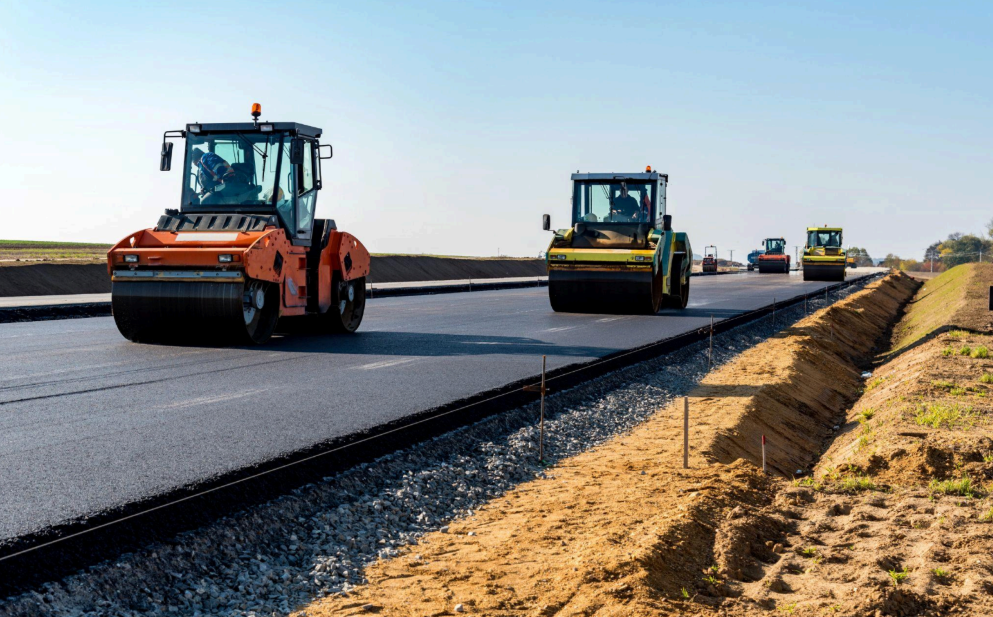
1. PMB — Polymer-Modified Bitumen (road bitumen): 3–6 % of D1101 in road bitumen raises the ring-and-ball (RB) softening point by +25–30 °C and lowers the Fraass breaking point by -15…-20 °C. This turns ordinary 60/90 bitumen into a premium SBS-PMB of class PMA45/65 (Superpave PG 76-22), suitable for heavy-traffic highways in hot and northern climates. Global standards: AASHTO M 332, EN 14023.
2. HMA / PSA — Hot-Melt and Pressure-Sensitive Adhesives: transparent adhesives for packaging, label stock, hygiene products (disposable diapers, sanitary napkins), book binding. D1101 combined with a tackifier (C5/C9 petroleum resins) and a plasticizer oil yields an adhesive withstanding cyclic loading of over 10⁶ peel cycles.
3. Footwear / shoe soles: anatomical and sports soles in the mid-price segment, where D1101 provides wear resistance, energy return and property retention at -20…+50 °C. A competitor to TPU and EVA in the mass-market segment.
4. Polystyrene impact modification and compatibilization: blending 5–10 % of D1101 into PS gives impact PS (a HIPS replacement) with a low-cost formulation; it is also used as a compatibilizer for PE/PS blends in recyclate.
Comparison within the Kraton D-series family
- Kraton D1101 — flagship, 31 % styrene, medium viscosity (this card)
- Kraton D1102 — lower viscosity, better processability for HMA
- Kraton D1116 — low viscosity, for oil-extended compounds
- Kraton D1118 — lower styrene (~30 %), softer, more flexible
- Kraton D1184 ASM — radial (asymmetric) — a different mechanism, for high-performance PMB and high-modulus HMA
- Kraton D1192 / D1193 — high styrene (40+ %), for high-stiffness HMA and hot-tracked PMB
Global equivalents of D1101 (for competitive positioning)
- Versalis (ENI) Europrene® SOL T 161 — the closest Italian equivalent
- LCY Globalprene® 3501 — Taiwan/Mainland China analog (see also #774 Globalprene 3710)
- TSRC TS-5841 — Taiwan analog
- Sinopec YH-791H — Chinese
- EN CHUAN 701 S — Taiwan (see #776)
- Sibur L 30-01 A — linear SBS (see #1270)
- Kumho KTR 101 — Korean (see #1491)
Limitations — honestly
- Not for exposed outdoor use without UV stabilization: the butadiene block contains C=C double bonds — sensitive to ozone and UV. Without a UV stabilizer, outdoor service life is 6–12 months. For outdoor use, switch to SEBS (the D-series is replaced by the Kraton G-series G1650, G1651, G1652 — hydrogenated, saturated).
- High melt viscosity — requires extruders with high torque and temperature settings of 180–220 °C; cannot be adequately dispersed on a single-screw machine without shear elements
- Not for contact with oils / aliphatic solvents (the styrene phase swells)
- In PMB formulations requires pre-blending with bitumen at 180–185 °C under a high-shear mixer for 30–90 min until full dispersion
- Without UV stabilization — yellowing and crazing in clear PSA
Target applications — in detail
Road construction (PMB): asphalt concrete for highways, bridge decks and airfield runways; roof waterproofing (SBS-modified bitumen roofing membranes, such as Sikaplan or Icopal types); road joint sealants.
Adhesives industry: hot-melt adhesives for packaging (containers, cardboard), self-adhesive label stock, specialty tape adhesives for bookbinding, hygiene products (absorbent core fixation).
Footwear industry: soles for sports and casual shoes; industrial anti-slip footwear; mid-segment children’s footwear.
Rubber goods: roofing and facade membranes, waterproofing of tunnels and underground structures, vibration-damping pads.
The stated values are measured by in-house methods close to the corresponding ISO, GOST and AASHTO standards. The information is for reference only and is not an official batch technical data sheet. Before industrial use, please request the Kraton TDS and MSDS for the specific batch.