Товары и услуги

Glass-filled polyamide PA610 KS (GOST 17648-83)

Description


PA610 KS offers the best you can expect from a glass-filled polyamide. Polyamide 610 with 30 % glass fiber, manufactured in accordance with GOST 17648-83 and OST 6-11-498-79.


It retains the unique characteristics of injection-molding PA610, such as resistance to gamma radiation, UV stability and low-temperature resistance down to -100 °C.


Key characteristics of PA610 KS include:

  • stable performance in humid environments;
  • excellent dielectric;
  • outstanding dimensional stability and creep resistance;
  • resistance to thermal deformation and warpage;
  • high anti-friction properties;
  • high resistance to oils and fuels.

Material Wizard offers several modifications of PA610 KS, produced by classical technologies that meet military acceptance requirements. We also supply modern Polyamide 610 GF 30 produced in Switzerland, the USA and Japan from renewable resources (using sebacic acid derived from castor oil).

You can buy glass-filled polyamide 610 from any global manufacturer at Material Wizard.


Applications


The aerospace and defense industries and nuclear power find the properties they need in PA610 KS. Product service life can exceed 50 years, and the stability of its properties allows parts to operate reliably in any climatic conditions. It is also used in sporting goods, fishing tackle, sailing and electronics.

Glass-filled polyamide PA610 KS (GOST 17648-83)
Parameter
Unit
Value
Physical properties:
Delivery form
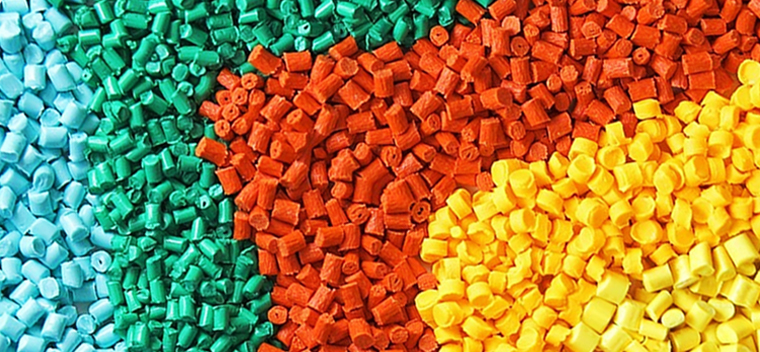
Pellets
Pellet size
mm
2…6
Density
g/cm³
1.31 (ISO 1183-1)
Glass fiber content
%
30 (ISO 3451-1)
Water absorption (saturation, 23 °C)
%
3 (ISO 62)
Moisture absorption (air, 23 °C, 50 % RH)
%
1.6 (ISO 1110)
Rheological properties:
Melt flow rate (MFR, 250 °C / 2.16 kg)
g/10 min
10 (ISO 1133-1)
Melt flow rate (MFR, 270 °C / 2.16 kg)
g/10 min
15 (ISO 1133-1)
Mold shrinkage (parallel to flow)
%
0.2 (ISO 294-4)
Mold shrinkage (transverse to flow)
%
0.7 (ISO 294-4)
Processing stability
class
9
Mechanical properties:
Tensile strength (conditioned specimen)
MPa
160 (ISO 527-1/-2)
Tensile strength (dry specimen)
MPa
180 (ISO 527-1/-2)
Tensile strength (artificial aging, 10 years)
MPa
140 (ISO 527-1/-2)
Charpy impact strength (unnotched, 23 °C)
kJ/m²
30 (ISO 179-1/1eU)
Charpy impact strength (unnotched, −40 °C)
kJ/m²
30 (ISO 179-1/1eU)
Unnotched impact strength at maximum moisture absorption, +23 °C
kJ/m²
40
Impact strength after 10 years of artificial aging, at +23 °C
kJ/m²
25
Charpy notched impact strength at +23 °C
kJ/m²
5 (ISO 179-1/1eA)
Charpy notched impact strength at -40 °C
kJ/m²
5 (ISO 179-1/1eA)
Ball indentation hardness, conditioned specimen
MPa
180 (ISO 2039-1)
Ball indentation hardness, dry specimen
MPa
150 (ISO 2039-1)
Flexural stress
MPa
180 (ISO 178)
Tensile elongation
%
6 (ISO 527-1/-2)
Compressive modulus, conditioned specimen
GPa
7
Compressive modulus, dry specimen
GPa
8
Flexural modulus, conditioned specimen
GPa
7 (ISO 178)
Flexural modulus, dry specimen
GPa
8 (ISO 178)
Thermal properties:
Melting temperature
°C
220 (ISO 11357-3)
Heat deflection temperature (HDT/A, 1.8 MPa)
°C
207 (ISO 75-2)
Heat deflection temperature (HDT/B, 0.45 MPa)
°C
215 (ISO 75-2)
Thermal conductivity
W/(m·K)
0,26 (ISO 22007)
Coefficient of linear thermal expansion, longitudinal
µm/(m·K)
30 (ISO 11359-2)
Coefficient of linear thermal expansion, transverse
µm/(m·K)
110 (ISO 11359-2)
Glow wire resistance temperature
°C
750 (IEC 60695-2-12)
Maximum recommended continuous service temperature
°C
110
Recommended temperature for short-term thermal loads
°C
160
Flammability
class
HB (UL 94)
Oxygen index
%
26 (ISO 4589-2)
Electrical properties:
Electric strength
kV/mm
45 (IEC 60243-1)
Volume resistivity
Ω·m
10¹³ (IEC 62631-3-1)
Surface resistivity
Ω
10¹³ (IEC 62631-3-2)
Tracking resistance
V
600 (IEC 60112)
*
Typical data for this polymer class, for reference.
Указанные показатели измеряются по внутренним методикам, близким к соответствующим ISO, ГОСТ Информация носит ознакомительный характер, рекомендуем использовать техническую информацию после согласования с поставщиком и подписания нормативно-технической спецификации