
Polyamide 610 is an engineering polyamide that is nearly half "grown in the field": half of its molecule comes from castor oil. Thanks to this, it absorbs noticeably less water than PA6 or PA66, is lighter than them, and is partly of biological origin. We break down what defines its properties, where it makes sense, and how it differs from its neighbors in the class.
Definition and nomenclature
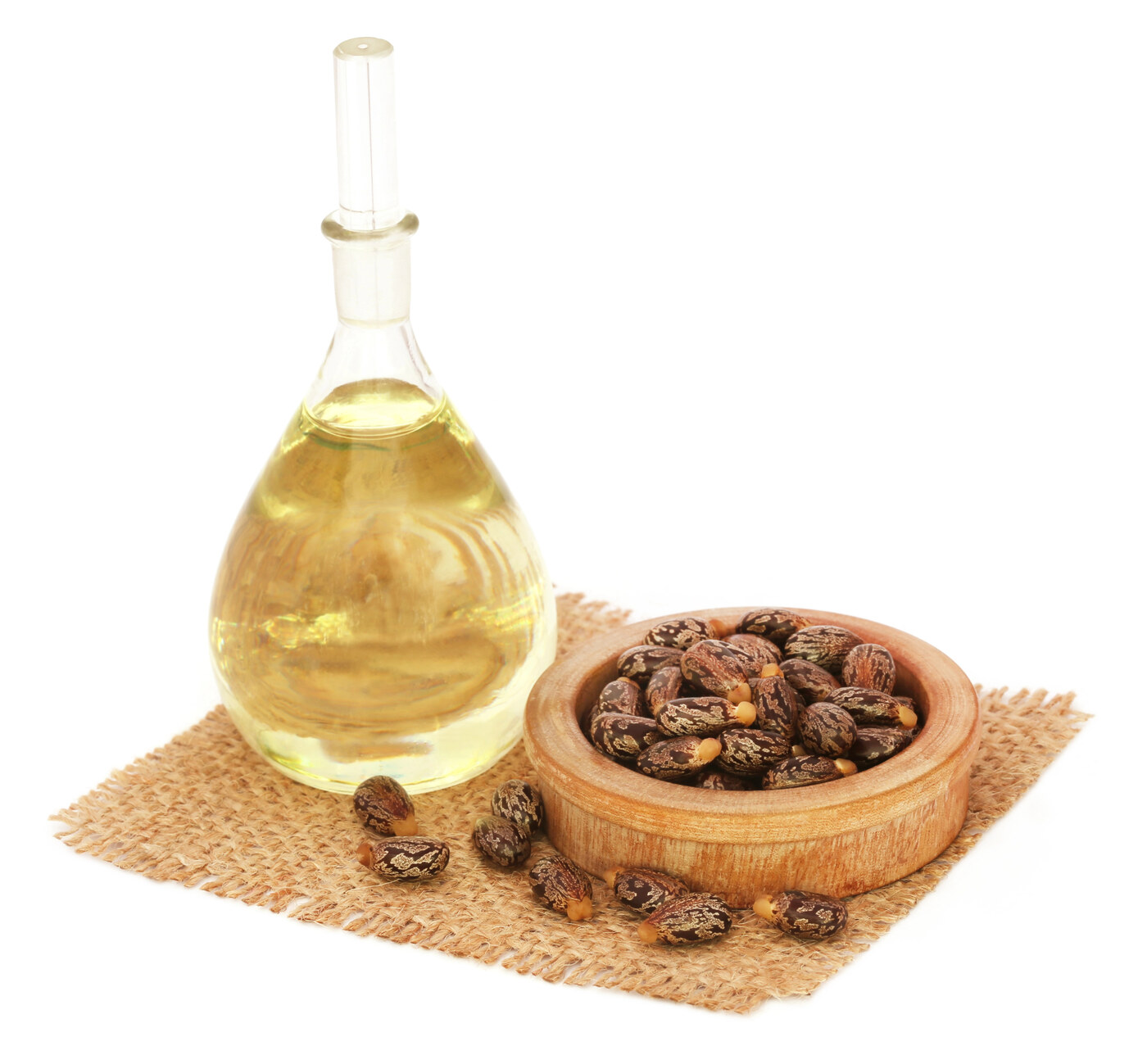
Polyamide 610 (PA610, nylon 6.10) is a partly bio-based aliphatic polyamide produced by polycondensation of hexamethylenediamine (6 carbon atoms) and sebacic acid (10 carbon atoms). Hence the numerical code "610": the first digit is the diamine, the second is the acid. The material's key feature is that sebacic acid is produced from castor oil, so a significant portion of the chain is of plant rather than petroleum origin.
| Parameter | Designation |
|---|---|
| Abbreviation per ISO 1043-1 | PA610 |
| Building blocks | hexamethylenediamine (C6) + sebacic acid (C10) |
| Repeat unit | –[NH–(CH₂)₆–NH–CO–(CH₂)₈–CO]– |
| Traditional names | nylon 6.10, nylon 610, PA 6.10 |
| Bio-based content (typical) | over 60% by mass — of plant origin |
Chemistry and structure: why PA610 is less afraid of moisture
Any polyamide is a long chain in which the links are joined by amide bonds (–CO–NH–), the same ones found in proteins. Different polyamides differ in how many carbon atoms sit between these bonds. In PA6 a single block of 6 carbons repeats; in PA66 two blocks of 6 alternate; in PA610 there is a block of 6 carbons from the diamine and a longer block of 10 carbons from sebacic acid.
It is precisely this longer "carbon insert" that determines the character of the material. Amide groups are hydrophilic — they attract water, and the more densely they are packed along the chain, the more water the polyamide absorbs. In PA610 there are fewer amide groups per unit of length than in PA6 or PA66, because they are "spread apart" by the long chains of sebacic acid. The metaphor is simple: imagine a necklace where the beads (the amide bonds that love water) are strung less frequently, because the gaps between them are longer. That is why PA610 is substantially less hygroscopic than ordinary polyamides — and this is exactly what makes it valuable.
The origin of sebacic acid from castor gives, by various estimates, over 60% bio-based content in the material, which lowers its carbon footprint compared with fully petroleum-based polyamides. This is not an "eco-compromise": mechanically it is a full-fledged engineering polyamide.
Properties
The values below are typical for the class of unfilled PA610, not a data sheet for a specific grade. PA610 is semi-crystalline, so the final characteristics depend markedly on the cooling regime and reinforcement.
| Parameter | Typical value | Method | Note |
|---|---|---|---|
| Density | 1.07–1.08 g/cm³ | ISO 1183 | unreinforced; lighter than PA6/PA66 |
| Melting point (Tm) | 215–225 °C | ISO 11357-3 | DSC; lower than PA66 |
| HDT at 1.8 MPa | ~55–60 °C | ISO 75-2 | unreinforced; considerably higher with glass/carbon |
| Elastic modulus | ~2.0–2.5 GPa | ISO 527 | base, unreinforced |
| Elongation at break | high, tough material | ISO 527 | impact-resistant |
| Water absorption, 24 h | ~0.4% | ISO 62 | considerably lower than PA6/PA66 |
| Water absorption, saturation | ~3% | ISO 62 | versus ~9% for PA6 |
How it is produced
PA610 is produced by step-growth polycondensation: hexamethylenediamine and sebacic acid are first combined into a "nylon salt," which is then heated, driving off water until the chains grow to the required molecular weight. Fundamentally this is the same process as for PA66, but with a different acid.
Historically, PA610 is one of the oldest engineering polyamides: it was studied as far back as DuPont's research program in the late 1930s, in parallel with PA66. Sebacic acid has long been obtained from castor oil, which is extracted from castor seeds (Ricinus communis). That is why PA610 was a "bio-based polyamide" long before the term became fashionable: the plant-derived component is built into its very chemistry rather than added artificially.
Typical applications
- Monofilament and bristle: fishing line, bristles for toothbrushes and paintbrushes, technical yarns — a classic niche for PA610 thanks to its stability in humid environments.
- Fuel and brake lines: tubing where resistance to fuel and oils and dimensional retention despite moisture and temperature swings are required.
- Electrical engineering: connectors and insulating parts where dimensional stability is important regardless of air humidity.
- Precision parts: gears, bushings, instrument housings where absorbed water in an ordinary polyamide would "loosen" the dimensions.
- Sports and consumer goods: parts that contact water and need to retain stiffness.
Comparison with neighbors in the class
| Property | PA6 | PA66 | PA610 | PA12 | PPA |
|---|---|---|---|---|---|
| Tm, °C | ~220 | ~260 | ~220 | ~178 | up to 310 |
| Water absorption (sat.), % | ~9 | ~7 | ~3 | ~1.3 | <1 |
| Density, g/cm³ | 1.14 | 1.14 | 1.08 | 1.01 | ~1.2 |
| Bio-based content | no | no | partial (>60%) | partial | mostly no |
| Relative price | 1× | 1.3× | 2–2.5× | 2.5–3× | ~5× |
PA610 occupies a logical place between the commodity PA6/PA66 and the expensive PA12: it is noticeably more stable under moisture than ordinary polyamides, lighter than them, and partly bio-based — yet more affordable than PA12. When even lower water absorption and chemical resistance are needed, the next step up is polyamide 12; when it comes to extreme temperatures, it is polyphthalamide (PPA). We covered the basic differences between common polyamides in the articles what is PA6 and PA66 versus PA6.
Industrial marking
Per ISO 1043, polyamides are designated with the prefix PA followed by digits of the composition: PA610 means a diamine with 6 and an acid with 10 carbon atoms. Reinforcement is added with a suffix: PA610-GF30 — with 30% glass, PA610-CF30 — with 30% carbon fiber (carbon nylon). Flammability is classified per UL94. The designation "bio-PA" or "PA610 (bio)" also appears — a note about the plant origin of part of the feedstock.
The Material Wizard grade in this category
Material Wizard manufactures engineering polyamides under the Examid® brand to its own formulation — from the base molding grade PA610-L with low water absorption to reinforced formulations, such as the carbon-filled Examid® PA610 CF30, which combines the low water absorption of a bio-based polyamide with the stiffness of carbon fiber. Such grades are comparable to well-known engineering PA610 compounds, but are made to our own formulation. If dimensional stability despite moisture is what matters most in a part, this class is worth considering; but if extreme chemical resistance or temperature is the deciding factor, the Examid® line includes PA12 CF30 and polyphthalamide PPA CF33.
Examid® PA610-LMolding-grade bio-based polyamide with low water absorptionBase unreinforced grade · dimensional stability · injection moldingRequest supply terms → Examid® PA610 CF30Bio-based polyamide with carbon-fiber reinforcementLow water absorption · partial bio-based content · dimensional stabilityRequest supply terms → Examid® PA12 CF30Carbon nylon for ATEX and marineWater absorption ~1.3% · even more stable under moistureRequest supply terms →The full range of reinforced polyamides is convenient to compare on the polyamide hub; carbon-filled grades — on the PA-CF hub. Material Wizard also works with recycled polyamides within its compound development program — details on the recycled polymers hub.
Limitations worth knowing about in advance
PA610 is not a "universal" material. Its heat resistance is lower than that of PA66: for continuous service above roughly 120–130 °C, one looks toward heat-stabilized PA66 or PPA. It is more expensive than commodity polyamides, so for parts where moisture is not critical, PA6/PA66 are often more sensible. Like all polyamides, PA610 requires drying of the pellets before processing and UV stabilization for long-term outdoor use. Concentrated strong acids destroy it.
What to check before a production launch
- Residual moisture of the pellets before molding/extrusion and the actual drying regime.
- Dimensional stability of the part after conditioning and "wet–dry" cycles (the PA610 advantage reveals itself precisely here).
- Resistance to the service environment: fuels, oils, hot water, cleaning solutions.
- Impact strength on the actual part at the minimum service temperature.
- For GF/CF grades — wear of the mold, screw, and hot runner, and anisotropy due to fiber orientation.
- Batch-to-batch consistency of characteristics and behavior after reprocessing of scrap.
Expert breakdown: 5 questions worth asking before choosing PA610
1. Is moisture stability really the deciding factor here? If the part operates dry or moisture is not critical, the premium for PA610 over PA6/PA66 will not pay off. PA610 justifies itself where moisture fluctuations would "loosen" the dimensions of an ordinary polyamide.
2. What is the real maximum service temperature? In heat resistance, PA610 is closer to PA6 than to PA66. Continuously above ~120–130 °C is the zone where it is worth looking at heat-stabilized PA66 or PPA.
3. Is stiffness needed from the material or from the geometry? Base PA610 has a moderate modulus. For stiff parts, GF- or CF-reinforced formulations are used, which give a multiple increase in modulus without losing the moisture stability of the base.
4. Is bio-based content important to your customer? If the specification or the product's marketing has a requirement for a share of renewable feedstock, the plant origin of PA610's sebacic acid is a real, not a "greenwashing," argument.
5. Is drying built into the process? Lower water absorption does not eliminate the need to dry the pellets before processing. "Wet" pellets produce the same defects (silver streaks, bubbles) as with any polyamide.
FAQ
How does PA610 differ from PA6 and PA66?
Chemically — in the longer "carbon insert" from sebacic acid. In practice this means lower water absorption (saturation ~3% versus ~9% for PA6), better dimensional stability in humid environments, and lower density. On the other hand, PA610 is more expensive and has somewhat lower heat resistance than PA66. It is chosen precisely when humidity fluctuations would "loosen" the dimensions of an ordinary nylon.
Why is PA610 called a bio-based polyamide?
Because sebacic acid — one of its two building blocks — is produced from castor oil, a plant-based feedstock. Thanks to this, by typical estimates, over 60% of the material's mass is of plant origin, which lowers the carbon footprint compared with fully petroleum-based polyamides. At the same time, in terms of properties it is a full-fledged engineering polyamide, not a "compromise eco-plastic."
How much lower is PA610's water absorption?
Approximately: at saturation PA610 absorbs about 3% water versus ~9% for PA6 and ~7% for PA66. This is an intermediate value between ordinary polyamides and the very stable PA12 (~1.3%). The exact figure depends on the grade and reinforcement and needs to be verified against the TDS.
Can you 3D-print with PA610?
Yes, PA610 and its bio-based analogs are used in FDM printing — some of the "nylon" filaments on the market are based precisely on PA610 thanks to lower warping compared with PA6. Injection molding and printing use different material preparations; which grade you specifically need — check with a specialist.
Can you buy PA610 in Ukraine?
Yes. Material Wizard manufactures reinforced compounds based on PA610 to its own formulation and ships pellets from warehouses. Purchase with delivery across Ukraine is possible; check the availability of a specific grade and terms with a specialist.
Material Wizard is a Ukrainian manufacturer and supplier of engineering polymers: technical grade selection, samples for testing, warehouses.