
Blog
Materialization of Digital Painting. Transparent Polymer Sheets as Canvas
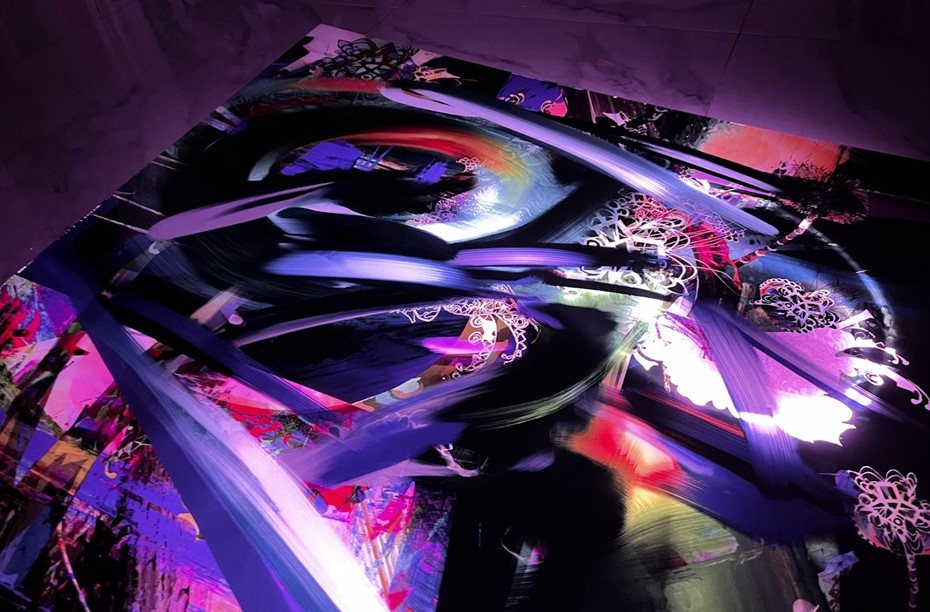
Material in art is not just a means to achieve the final product; it is a starting point that provokes thoughts, experiments, and new ideas. - Anish Kapoor
In a world where the boundaries between technology and art are becoming increasingly blurred, my practice unites these two spheres by using polymeric material to embody digital painting in the physical world. This article describes how polymethyl methacrylate (PMMA), better known as acrylic glass, becomes a key factor in preserving the depth and brightness of digital works when transferring them to canvas. Aspects of this process conceal their own challenges, difficulties, and advantages.

Technical reference: PMMA is a synthetic polymer with high aesthetic and optical properties, scratch-resistant, and holds its shape well.
Density 1.18 g/cm3
Melting point 160 °C
Bending temperature under load (1.8 MPa) 95°C
Recommended operating temperature up to 55°C
Stability of properties at an extremely low moisture absorption of 0.3%
Relevance of the task
Designers and artists are familiar with the problem of loss of color intensity and shifts in shades when printing computer images on paper or canvas. We usually do not notice this problem when creating outdoor advertising and performing marketing tasks. However, in the relatively new genre of digital painting, where the main idea of a work may be embedded in the subtlest shades and the play of light, the loss of the intended color parameters — brightness and saturation — is a disaster. Presenting a digital painting as a physical object, printed at the intended size and in the right colors, is vital to me as an artist.
The main technical problem
The RGB color model of a monitor, based on the three primary emitted colors — Red, Green, and Blue — uses internal light emission. Unfortunately, printing in this format is not possible, because inks have no internal illumination, unlike a monitor's pixels. Therefore, print shops work in CMYK format, adjusting color brightness through the percentage of the black printing layer. The color space of CMYK printing is much narrower than the monitor's RGB, which turns the original work into a new one — often duller and more lifeless. This aspect makes the high-quality transfer of computer painting into the gallery space extremely difficult. Next, we will look at a successful attempt to bring sophisticated digital art into the real world.
Solution: a transparent canvas
A few years ago, I found a solution by using a transparent polymer sheet (polymethyl methacrylate) to print pictures on. This printing technique makes it possible to achieve a live RGB effect, as the sheet lets light through (sunlight, like a stained-glass window, or interior lighting if hung on a wall). PMMA, or plexiglass, is familiar to print shops, where it is used for light boxes. It is rigid, has good ink adhesion, is impact-resistant compared to glass, light, and convenient. But I had not yet come across high-quality artistic printing on this material. I was stunned by the first results — the works shone with new life, showing both the depth of color and the vibrancy of the paints under the right lighting. Seeing my works at the sizes at which they were drawn was a new experience even for me as an artist, since I work either with fragments within the size of the monitor or with a scaled-down version.
Size matters
One of the most striking aspects of working with polymer is the ability to create large-scale works. It changes not only the audience's perception but also my own feeling for the work.
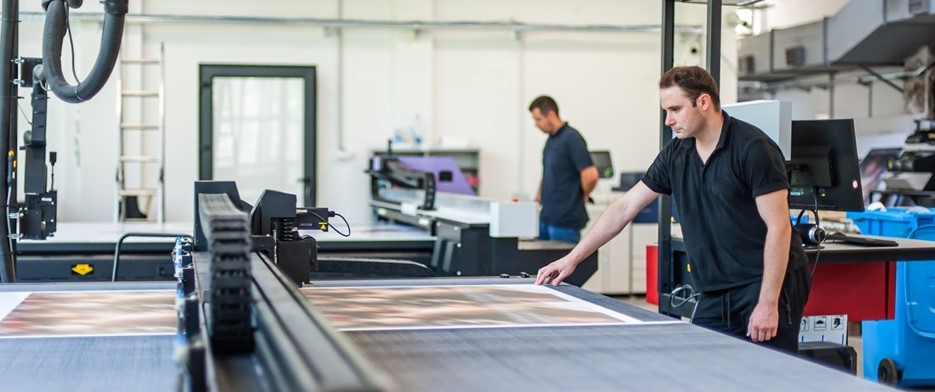
Printing process
Being able to see my works at their real size, I felt a new connection with them, as if they had taken on a life and story of their own. This process resembles the birth of a living being.
Perception and self-realization
Continuing my thought, I want to share more about the emotional meaning of this experience rather than its technical aspects. I have come to think that a successful print is the original of the work, while a digital file is more like film that needs to be developed on photo paper. It was a strange experience — to draw for years and finally see the originals of my works. The use of UV printing on a transparent polymer sheet not only solved the problem of color rendering but also opened up new opportunities for artistic self-realization. This method allowed me to combine two worlds, analog and digital, demonstrating that technology can not only coexist with art but also enhance its expressiveness and emotional depth. By using polymer as an element of the work, I not only share my vision but also invite viewers to a deeper level of communication, where everyone can feel a unique connection to the work. Thanks to the gloss of the front side of the sheet, the picture may feel colder and more cerebral, shielded by glare — but this suits certain abstractions well. From a different viewer position, on the contrary, it acquires depth and offers space for immersion. At first, I worried about how people would perceive my works in this format — this challenge to traditional notions of art. I was surprised at how positively my friends and acquaintances received the works. Reflecting on my practice, I realized that the materialization of the digital format fosters a greater dialogue between the artist and their audience.
 Me in front of my painting. Larger prints radiate dominance and transform the entire space of the room
Ethical aspects of plastics
The art we create is inseparable from the tools and materials we work with. The use of polymethyl methacrylate for digital painting has become not just a technical solution but a philosophy that allows art to overcome the boundaries between the virtual and the real, between the created and the felt. Staying within the professional topic of polymers, this is perhaps my first experience where plastic has provided a higher level of inspiration. We are used to treating polymers as an environmental problem, a matter of responsible waste management, or as a subject of work — economic efficiency, and so on. My successful use of polymer in art not only opened up new opportunities for self-expression but also revealed the ethical beauty of this material, when polymer is placed at the service of beauty. It has allowed me to bring into the physical world what I consider important, broadening the horizons of my understanding of my own creations, self-realization, and purpose.